Ad Fatigue on Meta: How to Spot It and Fix It
What ad fatigue is on Facebook and Instagram, the signs to watch in Ads Manager, what Creative Limited and Creative Fatigue mean, and how to fix tired ads fast.
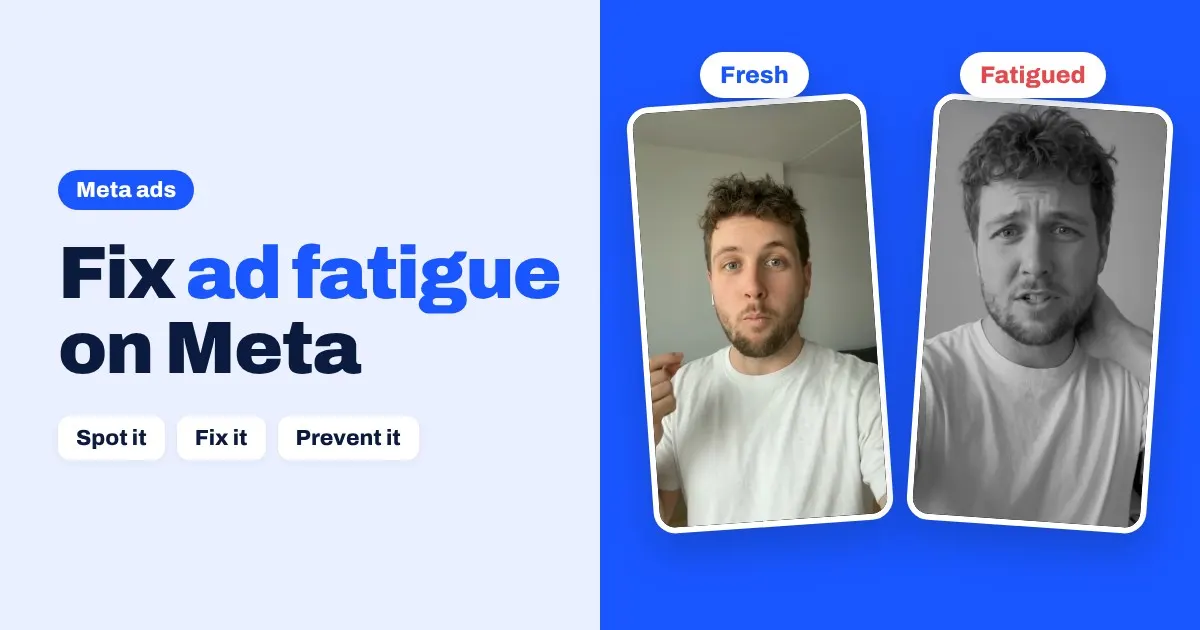
Every ad has a shelf life. It launches, finds its people, sells well for a while, and then the numbers start to slide. Clicks get more expensive, sales slow down, and nothing in your settings has changed. That slide is usually ad fatigue.
The good news is that fatigue is easy to spot once you know where to look, and it's one of the easiest ad problems to fix. This guide covers what it is, the signs to watch in Meta Ads Manager, what Meta's own fatigue labels mean, and what to do about it.
What ad fatigue is
Ad fatigue happens when the same people see the same ad too many times and stop responding to it. The first time someone sees your ad, it's new. The fifth time, they scroll past without thinking.
Meta puts it simply in its developer documentation: "Fatigue rises as an audience sees the same creative repeatedly," and it "usually shows up as a falling click-through rate and a rising cost per action" (Meta for Developers).
You'll also hear it called creative fatigue. It's the same thing. The problem is almost always the creative, not your targeting or your budget.
How fast do ads fatigue?
There's no fixed number of days. It depends on how much you spend, how big your audience is and how strong the ad is. A Billo article on the topic says strong Meta creatives often burn out in one to three weeks (Billo), but some ads run profitably for months.
Fatigue comes faster when:
- Your budget is big compared to your audience, so the same people see the ad again and again.
- You're retargeting a small group, like recent site visitors.
- You only have one or two ads running, so there's nothing else to show people.
- The ad is very recognisable, like a bold hook or a strong visual that people remember and skip.
The signs of ad fatigue
Fatigue rarely shows up in one number. Look for a few of these moving together over several days.
1. Click-through rate drops
CTR is usually the first number to fall. If an ad's CTR slides day after day while nothing else changed, people are losing interest in it.
2. Cost per result goes up
As fewer people click and buy, each sale or lead costs more. A steady rise in cost per purchase or cost per lead, with the same budget and targeting, is a classic sign.
3. Frequency keeps climbing
Frequency is the average number of times each person has seen your ad. A rising frequency on its own isn't a problem if results hold. But rising frequency plus falling CTR is fatigue.
4. Hook rate falls
For video ads, watch how many people stop to watch the first few seconds. If that share drops, your opening has gone stale. We explain how to track this in hook rate and hold rate.
5. Comments turn negative
"I keep seeing this ad" or "stop showing me this" in the comments is about as clear as it gets.
One warning: a higher CPM (cost per thousand impressions) alone doesn't always mean fatigue. Ad prices rise in busy seasons like Black Friday for everyone. Check whether CTR and conversions are falling too before you blame the creative.
What Creative Limited and Creative Fatigue mean
Meta sometimes labels tired ads for you in the Delivery column of Ads Manager. According to Jon Loomer's summary of Meta's definitions (Jon Loomer):
| Delivery status | What it means | What to do |
|---|---|---|
| Creative Limited | Cost per result is higher than it has been in the past, but less than double | Get a replacement ready |
| Creative Fatigue | Cost per result is at least twice as high as it has been in the past | Add fresh ads or replace this one |
Treat these labels as a hint, not the final word. They don't show up for every ad, and a brand-new ad can look worse for a day or two while it settles in. Always check the actual numbers before you act.
Meta's API also gives a creative fatigue level of low, medium or high (Meta for Developers), which some reporting tools show you.
Is it really fatigue? Rule these out first
Before you replace a creative, make sure something else isn't causing the drop:
- Did you change anything? A new budget, audience, bid or landing page can move results on its own.
- Is it seasonal? Costs rise for everyone around big shopping events and holidays.
- Is your website working? A broken checkout or slow page looks like a bad ad in the numbers.
- Did your offer end? If a discount finished, conversion rates fall.
If none of these apply and the signs above are moving together, it's fatigue.
Running out of fresh ads? Send us your product link and we'll make your first UGC ad free, so you have something new to test.
How to fix ad fatigue
Add new ads, don't just tweak old ones
The fastest fix is new creative. Add a few fresh ads to the same ad set rather than starting from scratch, so you don't throw away what the campaign has learned.
What counts as "new" matters. Changing the button colour or one word won't fool anyone. People need to see something that feels different in the first second.
Change the hook first
The hook is the first line and first shot of your video. It's what people recognise and skip. Keeping the rest of a winning ad and filming three to five new openings is often enough to bring it back to life. Our list of UGC ad hooks has 40 you can adapt.
Try a new angle
If new hooks don't help, the message itself may be worn out. Try a different reason to buy:
- A different problem the product solves
- A different type of customer
- A comparison with the old way of doing things
- A demo instead of a testimonial, or the other way round
Switch the format
If you've only run talking-head videos, try a voiceover over B-roll, an unboxing, a skit or a static image. A new format reaches people who ignored the old one.
Use a new creator
The same face in every ad starts to feel like the same ad. A different person, age or setting can make an old script feel new. This is one place where AI UGC helps, since you can test new creators without booking new shoots.
Widen your audience
If you're targeting a small group, fatigue comes fast. Broader targeting gives Meta more people to show your ads to, which spreads out frequency.
Pause only the tired ad
If one ad is clearly fatigued and others are still doing well, pause just that ad. Don't turn off the whole ad set.
How to prevent ad fatigue
You can't stop fatigue completely, but you can slow it down and make sure you're never caught without a replacement.
- Run several different ads at once. Meta now encourages advertisers to give its system a range of distinct creatives to choose from. We explain why in Meta Andromeda and your ad creatives.
- Make new ads every week or two. Don't wait for the old ones to die. A steady flow of new creatives means you always have something ready. See how many ad creatives to test.
- Build a backlog. Keep a few finished ads you haven't launched yet, ready to drop in.
- Keep a swipe file of what works. Look at what's running in your market with the free Meta Ad Library for fresh ideas.
- Watch the trend, not one day. Judge fatigue on a few days of data. One bad day is normal.
Should you always kill a fatigued ad?
Not always. If an ad is labelled Creative Limited but still sells at a cost you're happy with, keep it running while you prepare new ads. High frequency on its own isn't a problem if the ad is still profitable.
Kill it when it's clearly losing money compared to your other ads and you have something new to replace it with.
Common mistakes
- Changing too little. A new caption on the same video isn't a new ad to the viewer.
- Blaming the audience. Tightening targeting usually makes fatigue worse, not better.
- Waiting too long. By the time an ad is losing money, you should already have its replacement live.
- Reacting to one day. Give changes a few days before deciding.
- Only making one ad at a time. Testing one ad, then the next, leaves you with nothing when it fades.
FAQ
What is a good frequency for Facebook ads?
There's no single right number. For cold audiences, many advertisers start watching closely once frequency passes 2 to 3 over a week, but the real test is whether CTR and cost per result are holding up.
How long does a Facebook ad last?
Some ads last a week, others run profitably for months. Strong ads with big audiences last longest. Plan to add new creatives every week or two either way.
Does fatigue mean my targeting is wrong?
Usually not. Fatigue is a creative problem: people have seen the ad enough. New creative fixes it far more often than new targeting.
What's the difference between Creative Limited and Creative Fatigue?
Creative Limited means your cost per result has gone up, but by less than double. Creative Fatigue means it has at least doubled compared to the past.
Can I bring a fatigued ad back later?
Yes. After a break of a few weeks, an old winner can work again, especially with a new hook.
Ad fatigue is normal. Every ad gets tired eventually, and the brands that win are the ones with the next ad ready. If you'd like a steady supply of fresh ads to test, UGC Beast researches your market, writes the scripts and makes the videos, and your first one is free.